
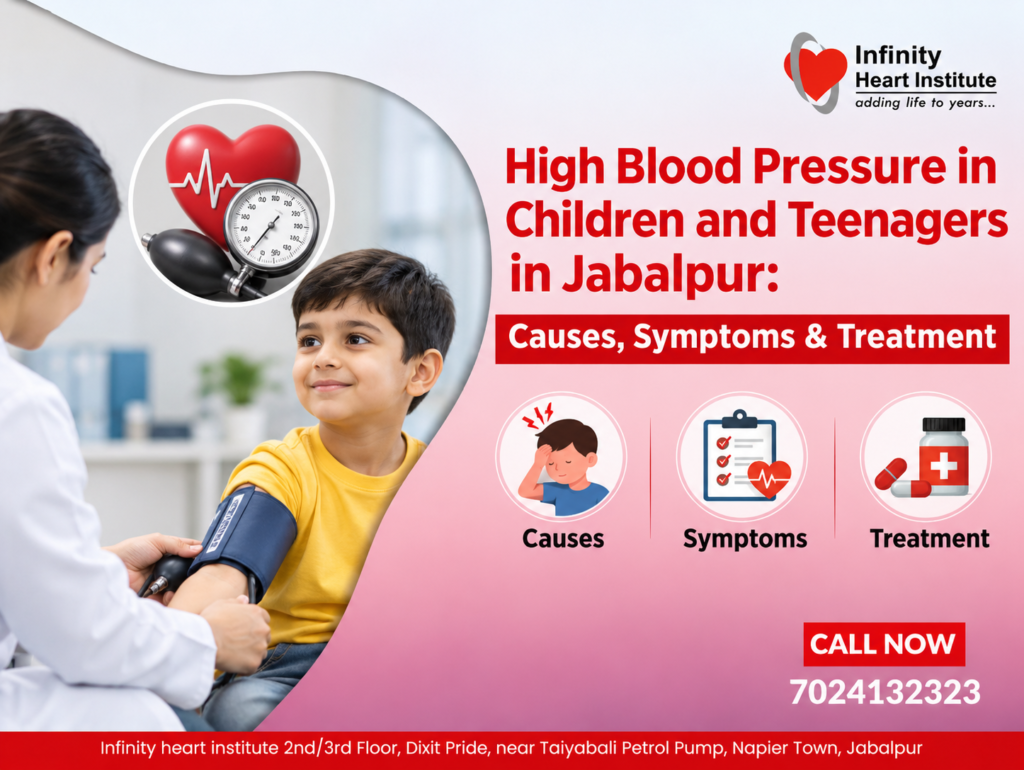
pediatrician in Jabalpur

Uncategorized

High Blood Pressure in Children and Teenagers in Jabalpur: Causes, Symptoms & Treatment

High  blood pressure is commonly associated with adults, but it can also affect children and teenagers. Changes in lifestyle, unhealthy eating habits, lack of physical activity, obesity, family history and certain underlying medical conditions can increase the risk of elevated blood pressure at an early age. Although children may not always show noticeable symptoms, persistent high blood pressure can affect their heart, kidneys and overall health. High Blood Pressure in Children and Teenagers in Jabalpur is an important health concern that parents should understand. Early identification and appropriate medical evaluation can help prevent potential complications and support healthy growth and development. At Infinity Heart Institute, Jabalpur, Dr. Reema Agrawal, Director of Pediatrics, provides pediatric care for newborns, infants and growing children. Her approach focuses on understanding a child’s health requirements, identifying medical concerns and guiding parents towards appropriate healthcare. What Is High Blood Pressure in Children and Teenagers? Blood pressure refers to the force exerted by circulating blood against the walls of the arteries. When this pressure remains consistently higher than the expected range, it is known as hypertension. Unlike adults, blood pressure levels in children are interpreted according to their age, sex and height. For younger children, doctors use percentile-based measurements, while adolescents aged 13 years and above generally follow fixed blood pressure categories. High Blood Pressure in Children and Teenagers in Jabalpur should not be diagnosed from a single elevated reading. Blood pressure needs to be measured correctly and confirmed through appropriate follow-up examinations. Parents should consider regular health assessments, especially if their child has obesity, kidney problems, diabetes or a family history of hypertension. What Causes High Blood Pressure in Children and Teenagers? There are several possible reasons why children may develop elevated blood pressure. Identifying the underlying cause is an important part of medical evaluation. 1. Childhood Obesity Excess body weight is one of the important risk factors for high blood pressure in older children and teenagers. Increased body fat can affect the cardiovascular system and contribute to elevated blood pressure. A balanced diet, regular physical activity and healthy lifestyle habits can help manage weight and support better heart health. 2. Family History of Hypertension Children with parents or close family members who have high blood pressure may have an increased risk of developing the condition. Genetic factors, combined with shared dietary and lifestyle habits, can influence blood pressure levels during childhood. 3. Kidney-Related Problems Kidneys play an important role in controlling fluid balance and blood pressure. Certain kidney conditions can interfere with this process and lead to hypertension. Persistent high readings, particularly in younger children, may require investigations to identify possible kidney-related causes. 4. Unhealthy Eating Habits Regular consumption of packaged snacks, processed foods, fast food and high-sodium meals can negatively affect cardiovascular health. Children who consume excessive salt and have limited intake of fruits and vegetables may develop unhealthy dietary patterns that contribute to elevated blood pressure. 5. Lack of Physical Activity Spending long hours watching television, playing video games or using mobile devices can reduce daily physical activity. A sedentary lifestyle may contribute to weight gain and increase the risk of cardiovascular health problems. 6. Hormonal and Other Medical Conditions Certain hormonal disorders, thyroid problems, blood vessel abnormalities and other medical conditions may also contribute to hypertension in children. A proper medical examination helps determine whether high blood pressure is related to lifestyle factors or an underlying health condition. What Are the Symptoms of High Blood Pressure in Children? High blood pressure is often called a silent condition because many children do not experience noticeable symptoms, particularly during the early stages. However, some children with significantly elevated blood pressure may experience: Frequent headaches Dizziness Blurred vision Unusual tiredness Shortness of breath Chest discomfort Nosebleeds in some cases Difficulty concentrating These symptoms can occur due to several different health conditions and do not automatically indicate hypertension. Parents should not ignore repeated complaints or unusual changes in their child’s health. A medical assessment can help identify the actual cause. How Is High Blood Pressure Diagnosed in Children? Accurate diagnosis is essential because children’s normal blood pressure ranges differ from those of adults. During a medical assessment, the doctor may consider the child’s age, height, weight, medical history and family history. Blood Pressure Measurement A healthcare professional measures blood pressure using an appropriately sized cuff. An incorrect cuff size or measurement technique can produce misleading results. If the initial reading is elevated, repeat measurements may be required. Medical History and Physical Examination The doctor may ask about: Family history of hypertension Previous kidney or heart conditions Birth history and medical complications Dietary habits Physical activity Current medications Sleep patterns and other symptoms Laboratory Investigations Depending on the child’s condition, blood and urine tests may be recommended to assess kidney function and identify possible underlying causes. Additional Diagnostic Tests Some children may require additional investigations, such as kidney ultrasound, echocardiography or ambulatory blood pressure monitoring (ABPM). ABPM records blood pressure at regular intervals during normal daily activities and sleep. It may help confirm hypertension and identify abnormal readings that are not consistently detected during clinic visits. What Are the Treatment Options for High Blood Pressure in Children? Treatment depends on the child’s age, blood pressure readings, underlying cause and overall health. The objective is to control blood pressure safely while supporting normal growth and development. 1. Healthy Dietary Changes A balanced diet is an important part of managing elevated blood pressure. Parents can encourage children to: Eat fresh fruits and vegetables. Reduce excessive salt consumption. Limit packaged and processed foods. Choose whole grains and nutritious meals. Drink sufficient water. Maintain regular meal timings. A DASH-style eating pattern may be recommended by the treating healthcare professional. 2. Regular Physical Activity Physical activity supports healthy weight management and cardiovascular fitness. Children should be encouraged to participate in age-appropriate activities such as walking, cycling, swimming, outdoor games and sports. For children and adolescents with elevated blood pressure, medical guidance may include moderate-to-vigorous physical activity for 30–60 minutes on 3–5
Child growth and development specialist in Jabalpur Dr. Reema Agrawal explaining child growth milestones, developmental delays, nutrition and growth monitoring.
Uncategorized

Child Growth and Development Specialist in Jabalpur: Dr. Reema Agrawal Explains Growth Milestones, Developmental Delays, Nutrition and Monitoring

Child Growth and Development Specialist in Jabalpur care focuses on understanding how a child grows physically, develops communication and learning skills, builds emotional and social abilities, and progresses through age-appropriate developmental milestones. Growth is not limited to height and weight. A child’s brain development, speech, language, movement, behaviour, social interaction, nutrition, sleep, and emotional well-being are also important parts of healthy development. Every child develops at an individual pace, but there are broad developmental milestones that pediatricians use to understand whether a child is progressing as expected. Regular assessment can help identify concerns early and guide parents about nutrition, stimulation, daily routines, vaccinations, learning, behaviour, and other aspects of childhood health. Dr. Reema Agrawal is the Director of Pediatrics at Infinity Heart Institute, Jabalpur. She completed her MBBS from Dr. Bhimrao Ambedkar University and MD in Pediatrics from IMS, BHU, Varanasi. Her professional experience includes work at IPGME&R-SSKM Hospital, and her areas of pediatric care include newborn care, child development, vaccination, pediatric emergencies, nutrition, and growth monitoring. What Is Child Growth and Development? Child growth refers mainly to measurable physical changes such as height, weight, head circumference in younger children, and body proportions. Development refers to the acquisition of abilities such as sitting, walking, speaking, understanding language, interacting with others, solving simple problems, and becoming increasingly independent. A Pediatrician in Jabalpur may look at both growth and development during routine pediatric visits. A child can have normal height and weight while experiencing a speech, language, behavioural, social, or motor delay. Similarly, a child may have a nutritional or growth concern even when developmental skills appear appropriate. This is why monitoring should consider the child as a whole rather than focusing on one measurement. Why Is Growth and Development Monitoring Important? Growth and development monitoring provides an opportunity to observe a child over time rather than evaluating development from a single visit. Height, weight, growth patterns, developmental skills, nutrition, sleep, behaviour, and physical health can be reviewed at appropriate intervals. A Child Specialist in Jabalpur may compare measurements and developmental progress with age-appropriate expectations and the child’s previous records. The purpose is not to compare one child with another but to identify patterns that may require closer observation. Regular monitoring can help parents understand whether a child is progressing appropriately and whether additional assessment may be useful. What Are the Major Areas of Child Development? Child development generally includes several interconnected areas. These include gross motor development, fine motor development, language and communication, cognitive development, social interaction, and emotional development. Gross motor skills involve larger body movements such as sitting, standing, walking, running, jumping, and climbing. Fine motor skills involve smaller movements such as holding objects, drawing, feeding, buttoning clothes, and using age-appropriate tools. Language development includes understanding words, making sounds, speaking, communicating needs, and gradually developing more complex language. Social and emotional development involves forming relationships, expressing emotions, responding to others, playing with peers, and developing independence. What Is Growth Monitoring in Jabalpur? Growth Monitoring in Jabalpur involves regularly assessing a child’s physical growth and looking at changes over time. Common measurements include weight and height or length, while head circumference is particularly important during infancy and early childhood. Growth charts can help healthcare professionals understand whether a child is following an expected growth pattern. A single measurement usually does not provide the complete picture. The pattern across multiple measurements is often more informative. Parents should also mention changes in appetite, eating behaviour, activity level, sleep, bowel habits, recurrent illnesses, or other concerns during pediatric visits. How Do Children Develop During the First Year? The first year involves rapid physical and neurological development. Babies gradually gain control over their head and body, learn to interact with caregivers, respond to sounds and faces, and develop increasingly purposeful movements. During the early months, parents may notice social smiles, cooing, recognition of familiar voices, improved head control, reaching for objects, rolling, sitting, and eventually crawling or moving independently. A Child Development Specialist in Jabalpur can help parents understand that developmental milestones are ranges rather than exact deadlines. Some variation is normal, but a significant delay or loss of a previously acquired skill should be evaluated. Development From One to Three Years Between one and three years, children usually become increasingly mobile and independent. Walking develops into running, climbing, and more coordinated movements. Fine motor skills also improve as children begin using spoons, stacking objects, turning pages, scribbling, and participating in simple daily activities. Language can progress from single words to short combinations and increasingly meaningful communication. Children also begin to understand simple instructions and develop stronger preferences. A Pediatrician in Jabalpur can assess language, motor, social, and cognitive development while also reviewing nutrition, sleep, vaccinations, and general health during these years. Development Between Three and Five Years The preschool years bring significant changes in communication, social interaction, imagination, and problem-solving. Children may begin asking many questions, telling simple stories, identifying colours and shapes, following more complex instructions, and participating in group activities. They gradually learn concepts such as sharing, taking turns, following rules, and managing emotions. Physical coordination also improves, allowing children to run, jump, draw, build, and perform more independent tasks. A Child Specialist in Jabalpur can help parents understand expected skills for this age and identify areas where additional support or developmental evaluation may be appropriate. What Are Developmental Milestones? Developmental milestones are skills that most children achieve within particular age ranges. They provide a framework for observing development rather than serving as a strict examination that every child must pass on a specific date. Milestones can include: Smiling and responding socially Making sounds and communicating Sitting independently Crawling or moving Walking Using hands to manipulate objects Understanding simple instructions Speaking words and sentences Engaging in pretend play Interacting with other children Developing self-care skills Growth Monitoring in Jabalpur may therefore be combined with developmental observation so that physical growth and developmental progress are considered together. What Is the Difference Between Growth and Development? Growth is primarily quantitative. It can

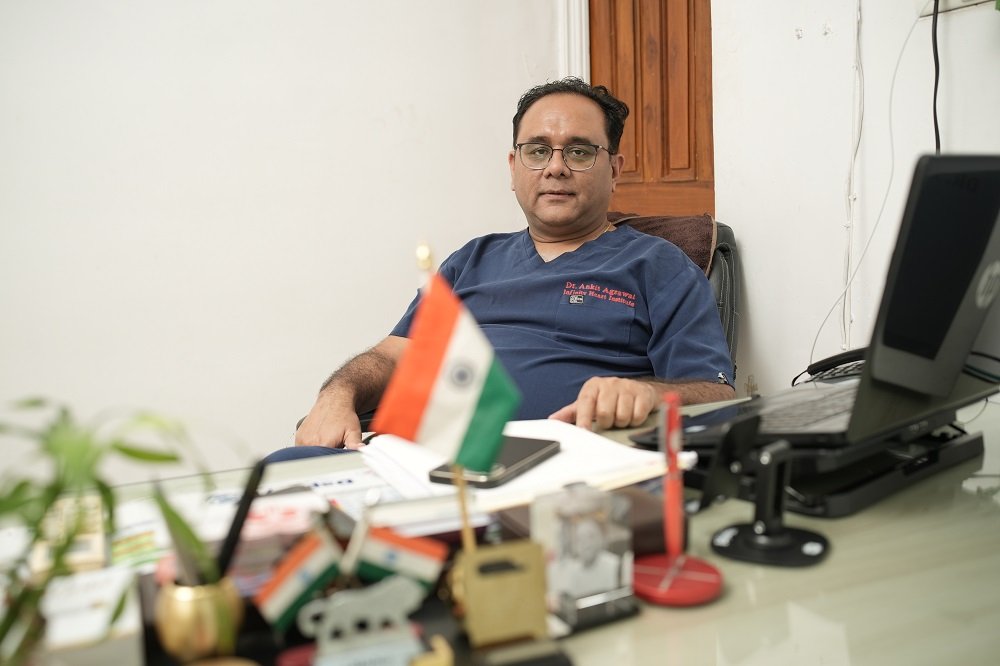
Dr. Ankit Agrawal, cardiologist, sitting at his office desk with laptop and Indian flag at Infinity Heart Institute Jabalpur
Uncategorized

Chest Pain While Walking, Climbing Stairs or Sleeping? Delaying Treatment Could Lead to Emergency Angioplasty in Jabalpur

Best Cardiologist in Jabalpur for Angioplasty is Dr Ankit Agrawal, a highly experienced and trusted Interventional Cardiologist known for advanced heart treatments, angiography, angioplasty, and emergency cardiac care. As the Director of Infinity Heart Institute, Jabalpur, Dr Ankit Agrawal specializes in treating blocked heart arteries, coronary artery disease, heart attacks, and complex cardiac conditions using modern interventional techniques. Patients looking for the Best Cardiologist in Jabalpur often choose Dr Ankit Agrawal because of his extensive experience, advanced cardiac expertise, and patient-focused treatment approach. At Infinity Heart Institute, Jabalpur, he provides comprehensive heart care for patients suffering from chest pain, breathlessness, blocked arteries, high blood pressure, and heart disease. Best Heart Specialist in Jabalpur – Dr Ankit Agrawal Best Heart Specialist in Jabalpur is Dr Ankit Agrawal, known for diagnosing and treating serious heart conditions before they become life-threatening emergencies. Heart disease remains one of the leading causes of death in India, and many patients ignore early warning signs such as chest pain, heaviness, breathlessness, excessive sweating, and discomfort during physical activity. Early consultation with an experienced Cardiologist in Jabalpur can help identify heart problems before they progress into heart attacks or require emergency angioplasty. Patients trust Dr Ankit Agrawal for: Angioplasty in Jabalpur Angiography in Jabalpur Heart Attack Treatment Chest Pain Treatment Coronary Artery Disease Treatment Emergency Cardiac Care Preventive Heart Checkups Dr Ankit Agrawal – Leading Cardiologist in Jabalpur Experience is one of the most important factors when choosing a Heart Specialist in Jabalpur. Dr Ankit Agrawal has extensive expertise in diagnosing and managing: Coronary Artery Disease Heart Attacks Angina High Blood Pressure Blocked Heart Arteries Cardiac Emergencies Patients choose Dr Ankit Agrawal because: Advanced Interventional Cardiology Expertise Modern Diagnostic Facilities Evidence-Based Treatment Personalized Cardiac Care Comprehensive Heart Evaluation His commitment to advanced cardiac treatment has made him one of the most trusted names for Angioplasty in Jabalpur. Chest Pain While Walking Could Be a Sign of Heart Blockage Many patients first notice symptoms while: Walking long distances Climbing stairs Exercising Carrying heavy objects Performing routine activities When heart arteries become narrowed, the heart receives less oxygen-rich blood during physical activity. This often causes chest pain, pressure, or discomfort. Ignoring these symptoms can increase the risk of severe artery blockage and future heart attacks. Chest Pain While Sleeping Should Never Be Ignored Many patients assume nighttime chest pain is caused by gas or acidity. However, chest pain occurring during rest or sleep may indicate: Severe coronary artery disease Unstable angina Reduced blood flow to the heart Impending heart attack Patients experiencing repeated chest pain during sleep should immediately consult a Cardiologist in Jabalpur. Warning Signs That May Indicate Heart Artery Blockage Heart-related chest pain may present with: Chest Heaviness A pressure-like sensation in the center of the chest. Tightness in the Chest A squeezing feeling that worsens during activity. Pain Spreading to the Arm Especially the left arm or shoulder. Jaw and Neck Pain Some heart patients experience discomfort beyond the chest. Breathlessness Difficulty breathing while walking or climbing stairs. Excessive Sweating Unexpected sweating associated with chest discomfort. Dizziness Feeling lightheaded or weak. These symptoms should never be ignored. Why Delaying Treatment Can Lead to Emergency Angioplasty Many patients continue ignoring symptoms until a major cardiac event occurs. Delaying treatment can result in: Progression of Heart Artery Blockage Partial blockages may become complete blockages. Heart Attack Sudden interruption of blood flow to the heart muscle. Permanent Heart Damage Delayed treatment can damage heart tissue permanently. Heart Failure Severe heart attacks can weaken the heart’s pumping ability. Emergency Angioplasty Many patients eventually require urgent intervention to save heart muscle. Early diagnosis significantly improves outcomes. Angiography in Jabalpur – Identifying Heart Artery Blockages Angiography is one of the most important tests used to evaluate coronary artery disease. This procedure helps determine: Location of blockage Severity of narrowing Number of affected arteries Appropriate treatment plan Dr Ankit Agrawal performs advanced Angiography in Jabalpur for patients with suspected heart disease. Angioplasty in Jabalpur – Restoring Blood Flow to the Heart Angioplasty is a minimally invasive procedure used to open blocked heart arteries. The procedure helps: Restore blood flow Relieve chest pain Improve heart function Reduce heart attack risk Improve quality of life For patients with significant coronary artery blockage, angioplasty can be a life-saving treatment. Who Is at Higher Risk of Requiring Angioplasty? Certain individuals have a greater risk of heart artery disease. Diabetes Diabetes significantly increases heart disease risk. High Blood Pressure Long-term hypertension damages arteries. High Cholesterol Contributes to plaque formation. Smoking One of the strongest risk factors. Obesity Increases cardiac workload. Family History of Heart Disease Genetics play a major role. Sedentary Lifestyle Lack of exercise contributes to artery blockage. These patients should undergo regular cardiac evaluations. Why Patients Choose Infinity Heart Institute, Jabalpur Infinity Heart Institute is known for advanced cardiac care and modern heart treatment facilities. Patients choose Infinity Heart Institute for: Angiography in Jabalpur Angioplasty in Jabalpur Emergency Heart Attack Treatment Advanced Cardiac Diagnostics Comprehensive Heart Care Experienced Cardiology Team The institute serves patients from Jabalpur and surrounding regions seeking specialized heart treatment. Why Dr Ankit Agrawal is the Best Cardiologist in Jabalpur for Angioplasty Dr Ankit Agrawal is widely trusted because of: Expertise in Interventional Cardiology Advanced Angioplasty Techniques Comprehensive Heart Care Modern Treatment Facilities Patient-Centered Approach Strong Reputation in Cardiac Treatment When choosing the Best Cardiologist in Jabalpur, many patients prefer Dr Ankit Agrawal for his experience and commitment to excellence in heart care. Summary Chest pain while walking, climbing stairs, exercising, or sleeping should never be ignored. Early symptoms often indicate underlying heart artery blockage that may worsen if left untreated. Timely consultation with an experienced Cardiologist in Jabalpur can help prevent heart attacks, reduce complications, and avoid emergency situations. FAQs – Best Cardiologist in Jabalpur Who is the Best Cardiologist in Jabalpur for Angioplasty? Dr Ankit Agrawal is a trusted Interventional Cardiologist known for advanced Angioplasty in Jabalpur and comprehensive heart care. When Is Angioplasty Required in Jabalpur? Angioplasty is usually recommended