Infinity Heart Institute

Uncategorized

High Blood Pressure in Children and Teenagers in Jabalpur: Causes, Symptoms & Treatment

High  blood pressure is commonly associated with adults, but it can also affect children and teenagers. Changes in lifestyle, unhealthy eating habits, lack of physical activity, obesity, family history and certain underlying medical conditions can increase the risk of elevated blood pressure at an early age. Although children may not always show noticeable symptoms, persistent high blood pressure can affect their heart, kidneys and overall health. High Blood Pressure in Children and Teenagers in Jabalpur is an important health concern that parents should understand. Early identification and appropriate medical evaluation can help prevent potential complications and support healthy growth and development. At Infinity Heart Institute, Jabalpur, Dr. Reema Agrawal, Director of Pediatrics, provides pediatric care for newborns, infants and growing children. Her approach focuses on understanding a child’s health requirements, identifying medical concerns and guiding parents towards appropriate healthcare. What Is High Blood Pressure in Children and Teenagers? Blood pressure refers to the force exerted by circulating blood against the walls of the arteries. When this pressure remains consistently higher than the expected range, it is known as hypertension. Unlike adults, blood pressure levels in children are interpreted according to their age, sex and height. For younger children, doctors use percentile-based measurements, while adolescents aged 13 years and above generally follow fixed blood pressure categories. High Blood Pressure in Children and Teenagers in Jabalpur should not be diagnosed from a single elevated reading. Blood pressure needs to be measured correctly and confirmed through appropriate follow-up examinations. Parents should consider regular health assessments, especially if their child has obesity, kidney problems, diabetes or a family history of hypertension. What Causes High Blood Pressure in Children and Teenagers? There are several possible reasons why children may develop elevated blood pressure. Identifying the underlying cause is an important part of medical evaluation. 1. Childhood Obesity Excess body weight is one of the important risk factors for high blood pressure in older children and teenagers. Increased body fat can affect the cardiovascular system and contribute to elevated blood pressure. A balanced diet, regular physical activity and healthy lifestyle habits can help manage weight and support better heart health. 2. Family History of Hypertension Children with parents or close family members who have high blood pressure may have an increased risk of developing the condition. Genetic factors, combined with shared dietary and lifestyle habits, can influence blood pressure levels during childhood. 3. Kidney-Related Problems Kidneys play an important role in controlling fluid balance and blood pressure. Certain kidney conditions can interfere with this process and lead to hypertension. Persistent high readings, particularly in younger children, may require investigations to identify possible kidney-related causes. 4. Unhealthy Eating Habits Regular consumption of packaged snacks, processed foods, fast food and high-sodium meals can negatively affect cardiovascular health. Children who consume excessive salt and have limited intake of fruits and vegetables may develop unhealthy dietary patterns that contribute to elevated blood pressure. 5. Lack of Physical Activity Spending long hours watching television, playing video games or using mobile devices can reduce daily physical activity. A sedentary lifestyle may contribute to weight gain and increase the risk of cardiovascular health problems. 6. Hormonal and Other Medical Conditions Certain hormonal disorders, thyroid problems, blood vessel abnormalities and other medical conditions may also contribute to hypertension in children. A proper medical examination helps determine whether high blood pressure is related to lifestyle factors or an underlying health condition. What Are the Symptoms of High Blood Pressure in Children? High blood pressure is often called a silent condition because many children do not experience noticeable symptoms, particularly during the early stages. However, some children with significantly elevated blood pressure may experience: Frequent headaches Dizziness Blurred vision Unusual tiredness Shortness of breath Chest discomfort Nosebleeds in some cases Difficulty concentrating These symptoms can occur due to several different health conditions and do not automatically indicate hypertension. Parents should not ignore repeated complaints or unusual changes in their child’s health. A medical assessment can help identify the actual cause. How Is High Blood Pressure Diagnosed in Children? Accurate diagnosis is essential because children’s normal blood pressure ranges differ from those of adults. During a medical assessment, the doctor may consider the child’s age, height, weight, medical history and family history. Blood Pressure Measurement A healthcare professional measures blood pressure using an appropriately sized cuff. An incorrect cuff size or measurement technique can produce misleading results. If the initial reading is elevated, repeat measurements may be required. Medical History and Physical Examination The doctor may ask about: Family history of hypertension Previous kidney or heart conditions Birth history and medical complications Dietary habits Physical activity Current medications Sleep patterns and other symptoms Laboratory Investigations Depending on the child’s condition, blood and urine tests may be recommended to assess kidney function and identify possible underlying causes. Additional Diagnostic Tests Some children may require additional investigations, such as kidney ultrasound, echocardiography or ambulatory blood pressure monitoring (ABPM). ABPM records blood pressure at regular intervals during normal daily activities and sleep. It may help confirm hypertension and identify abnormal readings that are not consistently detected during clinic visits. What Are the Treatment Options for High Blood Pressure in Children? Treatment depends on the child’s age, blood pressure readings, underlying cause and overall health. The objective is to control blood pressure safely while supporting normal growth and development. 1. Healthy Dietary Changes A balanced diet is an important part of managing elevated blood pressure. Parents can encourage children to: Eat fresh fruits and vegetables. Reduce excessive salt consumption. Limit packaged and processed foods. Choose whole grains and nutritious meals. Drink sufficient water. Maintain regular meal timings. A DASH-style eating pattern may be recommended by the treating healthcare professional. 2. Regular Physical Activity Physical activity supports healthy weight management and cardiovascular fitness. Children should be encouraged to participate in age-appropriate activities such as walking, cycling, swimming, outdoor games and sports. For children and adolescents with elevated blood pressure, medical guidance may include moderate-to-vigorous physical activity for 30–60 minutes on 3–5
Uncategorized

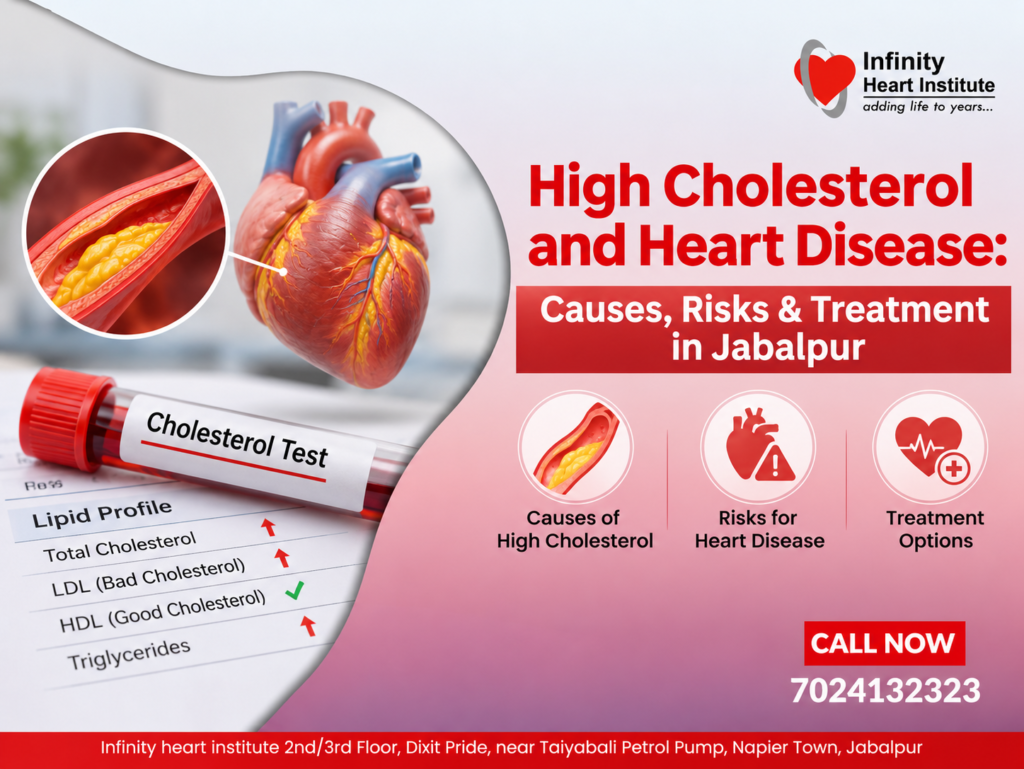
High Cholesterol and Heart Disease: Causes, Risks & Treatment in Jabalpur

High cholesterol is one of the most common health concerns affecting adults today. Many people do not realise that elevated cholesterol levels can gradually damage their blood vessels and increase the risk of serious cardiovascular problems. Understanding the connection between High Cholesterol and Heart Disease in Jabalpur is important for people who want to protect their heart health and prevent future complications. Cholesterol is a fatty substance naturally produced by the liver. The body needs it to build healthy cells and produce certain hormones. However, when cholesterol levels become abnormal, particularly when LDL cholesterol is elevated, fatty deposits can accumulate inside the arteries. This condition is known as atherosclerosis and may restrict blood flow to the heart. At Infinity Heart Institute, Jabalpur, Dr. Ankit Agrawal, MD, DM (Interventional Cardiology), focuses on the diagnosis and management of various heart-related conditions. With experience in interventional cardiology and procedures such as coronary angiography, angioplasty, pacemaker implantation and balloon mitral valvotomy, he provides cardiac care based on individual patient requirements. This article explains the causes, symptoms, risk factors, diagnostic tests and treatment options associated with high cholesterol and cardiovascular disease. What Is Cholesterol and Why Is It Important for Heart Health? Cholesterol is a waxy, fat-like substance that circulates in the bloodstream. Although the body requires cholesterol for normal functioning, having excessive amounts of certain types can increase cardiovascular risk. There are different types of cholesterol: 1. LDL (Low-Density Lipoprotein) LDL is commonly called bad cholesterol because excessive levels can contribute to plaque formation inside the arteries. Over time, these deposits can narrow the blood vessels and reduce blood supply to important organs. 2. HDL (High-Density Lipoprotein) HDL is known as good cholesterol because it helps transport excess cholesterol from the bloodstream towards the liver for processing and removal. 3. Triglycerides Triglycerides are another type of fat present in the blood. High triglyceride levels, particularly when combined with elevated LDL or low HDL, may increase cardiovascular risk. A lipid profile helps measure these components and gives doctors important information about a person’s cardiovascular health. What Is the Connection Between High Cholesterol and Heart Disease? The relationship between High Cholesterol and Heart Disease in Jabalpur is important because abnormal cholesterol levels can contribute to coronary artery disease. When LDL cholesterol remains elevated for a long time, it can enter the walls of the arteries and contribute to plaque formation. These plaques gradually make the arteries narrower and less flexible. This process can lead to: Reduced blood flow to the heart. Coronary artery disease. Increased risk of angina or chest pain. Greater possibility of heart attack. Increased risk of stroke due to arterial disease. In some cases, a plaque may rupture and trigger the formation of a blood clot. If the clot blocks an artery supplying the heart, it can cause a heart attack. People looking for a Cardiologist in Jabalpur should understand that cholesterol management is not only about reducing a laboratory number. It is also about evaluating overall cardiovascular risk and preventing complications. What Are the Common Causes of High Cholesterol? Several factors can contribute to elevated cholesterol levels. Some are related to daily habits, while others may be genetic or associated with existing health conditions. 1. Unhealthy Eating Habits Frequent consumption of foods containing high amounts of saturated and trans fats may negatively affect cholesterol levels. Examples include: Deep-fried foods. Processed snacks. Excessive bakery products. Fatty and processed meats. Foods containing partially hydrogenated oils. A balanced diet with vegetables, fruits, whole grains, legumes and healthy fats can support better cholesterol control. 2. Lack of Physical Activity A sedentary lifestyle can contribute to weight gain, lower HDL cholesterol and increased cardiovascular risk. Regular physical activity helps improve overall metabolic health. 3. Obesity and Excess Body Weight Excess body fat, particularly around the abdomen, is associated with abnormal lipid levels. Maintaining a healthy weight can improve cholesterol and other cardiovascular risk factors. 4. Smoking and Tobacco Consumption Smoking damages blood vessels and increases cardiovascular risk. It may also negatively affect HDL cholesterol and contribute to plaque formation. 5. Diabetes and High Blood Pressure People with diabetes and hypertension often have a higher risk of cardiovascular complications. These conditions can occur alongside abnormal cholesterol levels, making regular monitoring important. 6. Family History and Genetics Some people inherit conditions such as familial hypercholesterolaemia, which can cause very high LDL cholesterol even at a young age. What Are the Symptoms of High Cholesterol? One important fact about high cholesterol is that it usually does not produce noticeable symptoms in the early stages. Many people discover the condition only when they undergo a routine blood test or develop complications related to narrowed arteries. Possible warning signs of associated cardiovascular disease include: Chest pain or pressure, especially during physical activity. Breathlessness during exertion. Unusual tiredness. Pain or discomfort spreading towards the arms, back, neck or jaw. Dizziness or fainting in certain cardiac conditions. These symptoms should not automatically be attributed to cholesterol. They require proper medical evaluation. Sudden chest pressure, severe breathlessness, cold sweating, fainting or pain spreading to the arm or jaw may indicate a heart attack. Seek emergency medical assistance immediately rather than waiting for a routine appointment. Who Is at Higher Risk of Cholesterol-Related Heart Disease? Certain individuals need closer monitoring because they may have a greater likelihood of developing cardiovascular complications. Common risk factors include: Adults with elevated LDL cholesterol. People with diabetes or high blood pressure. Individuals who smoke. People with obesity or limited physical activity. Individuals with a family history of early heart disease. People with existing coronary artery disease. Individuals with kidney disease or certain metabolic disorders. A Heart Specialist in Jabalpur can assess these factors together rather than evaluating cholesterol levels in isolation. Which Tests Help Diagnose High Cholesterol and Heart Disease? Early diagnosis allows doctors to identify cardiovascular risk and recommend appropriate preventive measures. 1. Lipid Profile Test A lipid profile is a blood test that measures: Total cholesterol. LDL cholesterol. HDL cholesterol. Triglycerides. The results help doctors understand a

Uncategorized

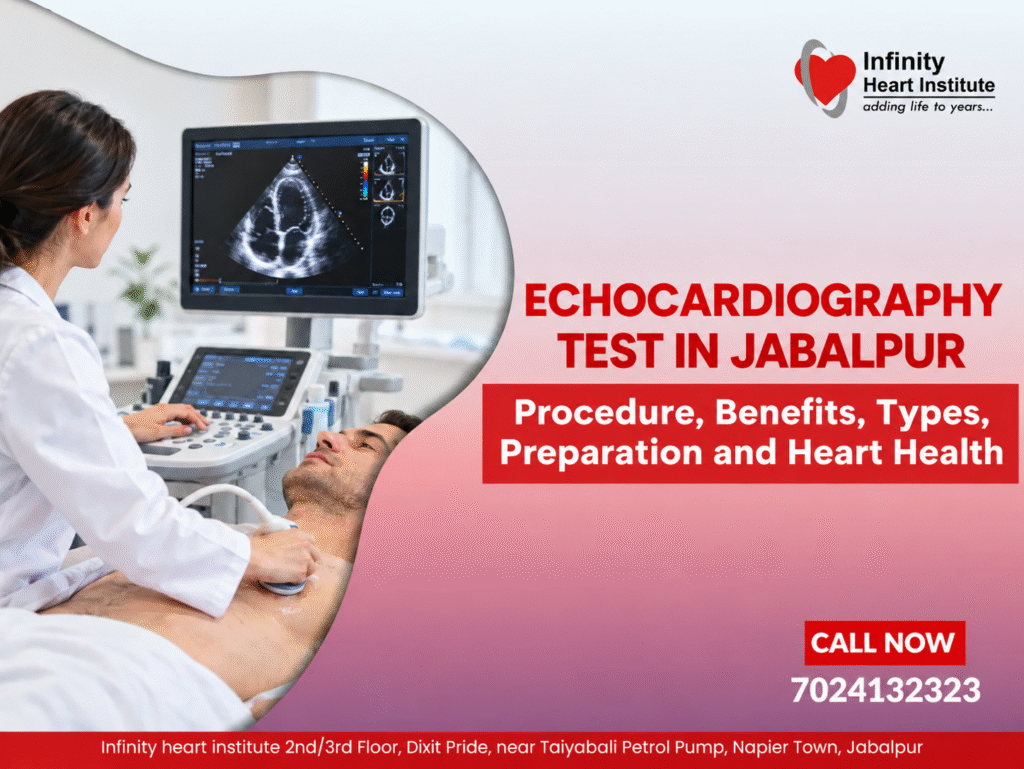
Echocardiography Test in Jabalpur: Procedure, Benefits, Types, Preparation and Heart Health

An Echocardiography Test in Jabalpur is an important diagnostic investigation used to assess the structure and function of the heart. Commonly called an echocardiogram or 2D echo, this test uses ultrasound waves to create moving images of the heart. It helps doctors examine the heart chambers, valves, muscle movement and blood flow without using ionising radiation. Doctors may recommend an echocardiography test when a person experiences breathlessness, chest discomfort, unexplained fatigue, palpitations or symptoms that may indicate a heart condition. It can also help monitor previously diagnosed heart disease and assess cardiac function over time. Patients researching an Echocardiography Specialist in Jabalpur should check the clinician’s qualifications, the diagnostic facilities available and how the report will be interpreted. The appropriate investigation depends on medical history, symptoms and clinical examination. What Is an Echocardiography Test? An echocardiography test is a non-invasive investigation that uses high-frequency sound waves to produce moving images of the heart. A standard transthoracic echocardiogram involves placing an ultrasound probe on the chest to capture images from different angles. The examination helps doctors assess: The size and shape of the heart chambers The thickness and movement of the heart muscle The opening and closing of heart valves The heart’s pumping function Blood flow through the heart Certain structural abnormalities Fluid accumulation around the heart An Echocardiography Test in Jabalpur may be recommended when clinical findings suggest that an assessment of heart structure or function is necessary. It is important to understand that an echocardiogram does not replace every other cardiac investigation. An ECG records electrical activity, whereas an echocardiogram provides images of the heart’s structure and movement. Patients considering a 2D echo should confirm that the examination matches their doctor’s referral and that a qualified professional will review the findings. Why Is Echocardiography Important for Heart Health? The heart pumps blood throughout the body, delivering oxygen and nutrients to organs and tissues. Problems involving the heart muscle, valves or blood flow can interfere with this process. Echocardiography helps doctors investigate these changes and decide whether further evaluation, treatment or follow-up is required. An Echocardiography Test in Jabalpur may be used to assess suspected heart failure, valve disease, enlarged heart chambers, reduced pumping function, congenital heart abnormalities, fluid around the heart and selected complications after a heart attack. A 2D echo may be considered when the clinician needs to examine valve movement, chamber dimensions or pumping function. Not every episode of fatigue or chest discomfort requires an echocardiogram; the decision should be based on clinical need. What Conditions Can an Echocardiogram Detect? 1. Heart Valve Disease Heart valves control the direction of blood flow through the heart. If a valve becomes narrowed or does not close properly, blood flow may be affected. Echocardiography helps assess valve movement, structure and the severity of many valve abnormalities. 2. Reduced Pumping Function An echocardiogram can help evaluate how effectively the heart pumps blood. One measurement commonly included in the report is the left ventricular ejection fraction, which represents the percentage of blood pumped out of the left ventricle with each contraction. 3. Heart Chamber Enlargement An echocardiogram can show whether one or more heart chambers are enlarged. This may occur with valve disorders, cardiomyopathy, congenital conditions or other cardiac problems. 4. Cardiomyopathy Cardiomyopathy refers to diseases affecting the heart muscle. Echocardiography helps assess changes in muscle thickness, chamber size and pumping function. 5. Fluid Around the Heart Fluid can accumulate in the sac surrounding the heart, a condition known as pericardial effusion. Echocardiography can identify the fluid and help doctors assess whether it affects cardiac function. 6. Congenital Heart Conditions Some structural abnormalities present from birth can be detected or evaluated using echocardiography. An echocardiogram may be recommended when a clinician needs to assess heart anatomy, valve function or pumping performance. What Is a 2D Echo Test? A 2D echo test produces two-dimensional moving images of the heart in real time. It allows clinicians to observe the chambers, valves and heart muscle from different angles. Doppler techniques may be used alongside 2D imaging to assess the direction and speed of blood flow. A Heart Ultrasound Test in Jabalpur generally refers to ultrasound-based cardiac imaging. The precise examination depends on the clinical question and the type of echocardiography requested. Patients arranging a 2D echo should confirm the type of scan available, whether the report is included and how the findings will be reviewed. The report should be interpreted by an appropriately qualified medical professional. How Is an Echocardiography Test Performed? A standard transthoracic echocardiogram is usually straightforward and does not require an incision. Step 1: Preparation The patient may be asked to remove clothing from the upper body and wear a medical gown. Small electrodes may be attached to the chest to monitor heart rhythm. Step 2: Positioning The patient generally lies on an examination bed, often turned slightly onto the left side to help obtain clearer images. Step 3: Applying Ultrasound Gel A small amount of gel is applied to the chest to improve contact between the ultrasound probe and the skin. Step 4: Capturing Images The clinician or trained sonographer moves the probe across different areas of the chest. The patient may be asked to change position or briefly adjust breathing. Step 5: Reviewing the Findings The images and measurements are reviewed and interpreted by an appropriately qualified clinician. The findings are considered alongside symptoms, medical history and other investigations. A routine echocardiogram is generally painless, although mild pressure from the probe may be felt. Patients can ask the medical team about the expected duration and when the report will be available. How Long Does an Echocardiogram Take? A standard transthoracic echocardiogram commonly takes around 30–60 minutes. The duration may vary according to the complexity of the examination and the images required. A Cardiac Imaging Test in Jabalpur may involve echocardiography or another investigation, depending on the doctor’s recommendation. Patients should confirm which investigation has been scheduled and check the appointment details before attending. Different Types of Echocardiography Transthoracic Echocardiography

Child growth and development specialist in Jabalpur Dr. Reema Agrawal explaining child growth milestones, developmental delays, nutrition and growth monitoring.
Uncategorized

Child Growth and Development Specialist in Jabalpur: Dr. Reema Agrawal Explains Growth Milestones, Developmental Delays, Nutrition and Monitoring

Child Growth and Development Specialist in Jabalpur care focuses on understanding how a child grows physically, develops communication and learning skills, builds emotional and social abilities, and progresses through age-appropriate developmental milestones. Growth is not limited to height and weight. A child’s brain development, speech, language, movement, behaviour, social interaction, nutrition, sleep, and emotional well-being are also important parts of healthy development. Every child develops at an individual pace, but there are broad developmental milestones that pediatricians use to understand whether a child is progressing as expected. Regular assessment can help identify concerns early and guide parents about nutrition, stimulation, daily routines, vaccinations, learning, behaviour, and other aspects of childhood health. Dr. Reema Agrawal is the Director of Pediatrics at Infinity Heart Institute, Jabalpur. She completed her MBBS from Dr. Bhimrao Ambedkar University and MD in Pediatrics from IMS, BHU, Varanasi. Her professional experience includes work at IPGME&R-SSKM Hospital, and her areas of pediatric care include newborn care, child development, vaccination, pediatric emergencies, nutrition, and growth monitoring. What Is Child Growth and Development? Child growth refers mainly to measurable physical changes such as height, weight, head circumference in younger children, and body proportions. Development refers to the acquisition of abilities such as sitting, walking, speaking, understanding language, interacting with others, solving simple problems, and becoming increasingly independent. A Pediatrician in Jabalpur may look at both growth and development during routine pediatric visits. A child can have normal height and weight while experiencing a speech, language, behavioural, social, or motor delay. Similarly, a child may have a nutritional or growth concern even when developmental skills appear appropriate. This is why monitoring should consider the child as a whole rather than focusing on one measurement. Why Is Growth and Development Monitoring Important? Growth and development monitoring provides an opportunity to observe a child over time rather than evaluating development from a single visit. Height, weight, growth patterns, developmental skills, nutrition, sleep, behaviour, and physical health can be reviewed at appropriate intervals. A Child Specialist in Jabalpur may compare measurements and developmental progress with age-appropriate expectations and the child’s previous records. The purpose is not to compare one child with another but to identify patterns that may require closer observation. Regular monitoring can help parents understand whether a child is progressing appropriately and whether additional assessment may be useful. What Are the Major Areas of Child Development? Child development generally includes several interconnected areas. These include gross motor development, fine motor development, language and communication, cognitive development, social interaction, and emotional development. Gross motor skills involve larger body movements such as sitting, standing, walking, running, jumping, and climbing. Fine motor skills involve smaller movements such as holding objects, drawing, feeding, buttoning clothes, and using age-appropriate tools. Language development includes understanding words, making sounds, speaking, communicating needs, and gradually developing more complex language. Social and emotional development involves forming relationships, expressing emotions, responding to others, playing with peers, and developing independence. What Is Growth Monitoring in Jabalpur? Growth Monitoring in Jabalpur involves regularly assessing a child’s physical growth and looking at changes over time. Common measurements include weight and height or length, while head circumference is particularly important during infancy and early childhood. Growth charts can help healthcare professionals understand whether a child is following an expected growth pattern. A single measurement usually does not provide the complete picture. The pattern across multiple measurements is often more informative. Parents should also mention changes in appetite, eating behaviour, activity level, sleep, bowel habits, recurrent illnesses, or other concerns during pediatric visits. How Do Children Develop During the First Year? The first year involves rapid physical and neurological development. Babies gradually gain control over their head and body, learn to interact with caregivers, respond to sounds and faces, and develop increasingly purposeful movements. During the early months, parents may notice social smiles, cooing, recognition of familiar voices, improved head control, reaching for objects, rolling, sitting, and eventually crawling or moving independently. A Child Development Specialist in Jabalpur can help parents understand that developmental milestones are ranges rather than exact deadlines. Some variation is normal, but a significant delay or loss of a previously acquired skill should be evaluated. Development From One to Three Years Between one and three years, children usually become increasingly mobile and independent. Walking develops into running, climbing, and more coordinated movements. Fine motor skills also improve as children begin using spoons, stacking objects, turning pages, scribbling, and participating in simple daily activities. Language can progress from single words to short combinations and increasingly meaningful communication. Children also begin to understand simple instructions and develop stronger preferences. A Pediatrician in Jabalpur can assess language, motor, social, and cognitive development while also reviewing nutrition, sleep, vaccinations, and general health during these years. Development Between Three and Five Years The preschool years bring significant changes in communication, social interaction, imagination, and problem-solving. Children may begin asking many questions, telling simple stories, identifying colours and shapes, following more complex instructions, and participating in group activities. They gradually learn concepts such as sharing, taking turns, following rules, and managing emotions. Physical coordination also improves, allowing children to run, jump, draw, build, and perform more independent tasks. A Child Specialist in Jabalpur can help parents understand expected skills for this age and identify areas where additional support or developmental evaluation may be appropriate. What Are Developmental Milestones? Developmental milestones are skills that most children achieve within particular age ranges. They provide a framework for observing development rather than serving as a strict examination that every child must pass on a specific date. Milestones can include: Smiling and responding socially Making sounds and communicating Sitting independently Crawling or moving Walking Using hands to manipulate objects Understanding simple instructions Speaking words and sentences Engaging in pretend play Interacting with other children Developing self-care skills Growth Monitoring in Jabalpur may therefore be combined with developmental observation so that physical growth and developmental progress are considered together. What Is the Difference Between Growth and Development? Growth is primarily quantitative. It can