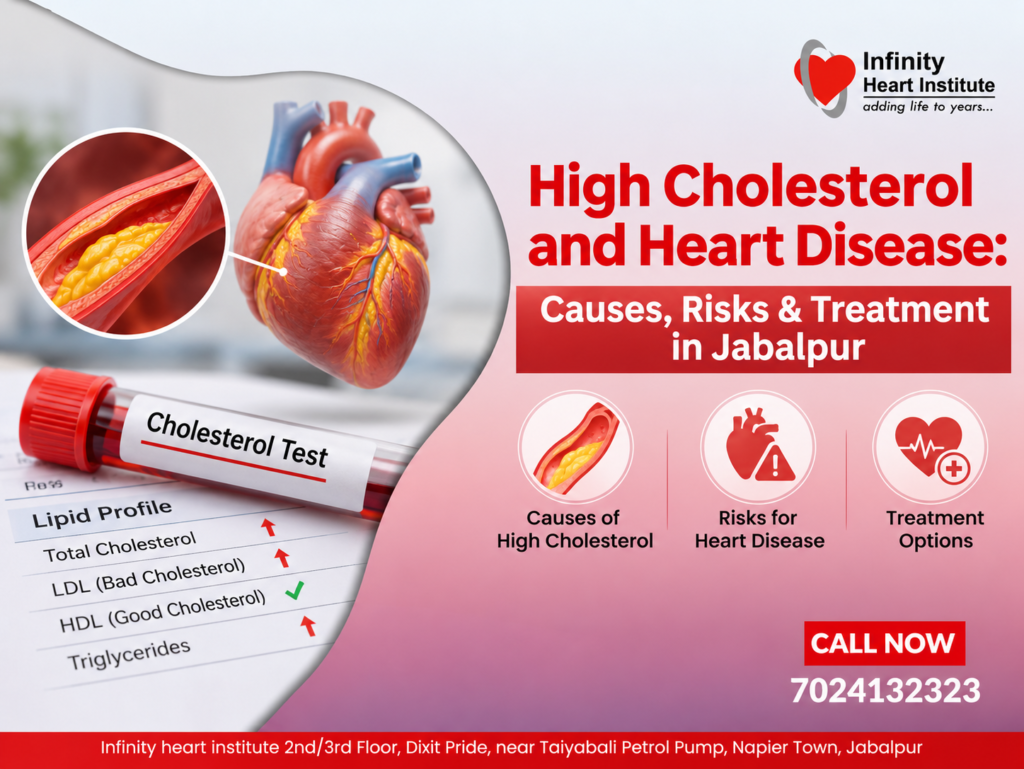
High Cholesterol and Heart Disease: Causes, Risks & Treatment in Jabalpur
High cholesterol is one of the most common health concerns affecting adults today. Many people do not realise that elevated cholesterol levels can gradually damage their blood vessels and increase the risk of serious cardiovascular problems. Understanding the connection between High Cholesterol and Heart Disease in Jabalpur is important for people who want to protect their heart health and prevent future complications. Cholesterol is a fatty substance naturally produced by the liver. The body needs it to build healthy cells and produce certain hormones. However, when cholesterol levels become abnormal, particularly when LDL cholesterol is elevated, fatty deposits can accumulate inside the arteries. This condition is known as atherosclerosis and may restrict blood flow to the heart. At Infinity Heart Institute, Jabalpur, Dr. Ankit Agrawal, MD, DM (Interventional Cardiology), focuses on the diagnosis and management of various heart-related conditions. With experience in interventional cardiology and procedures such as coronary angiography, angioplasty, pacemaker implantation and balloon mitral valvotomy, he provides cardiac care based on individual patient requirements. This article explains the causes, symptoms, risk factors, diagnostic tests and treatment options associated with high cholesterol and cardiovascular disease. What Is Cholesterol and Why Is It Important for Heart Health? Cholesterol is a waxy, fat-like substance that circulates in the bloodstream. Although the body requires cholesterol for normal functioning, having excessive amounts of certain types can increase cardiovascular risk. There are different types of cholesterol: 1. LDL (Low-Density Lipoprotein) LDL is commonly called bad cholesterol because excessive levels can contribute to plaque formation inside the arteries. Over time, these deposits can narrow the blood vessels and reduce blood supply to important organs. 2. HDL (High-Density Lipoprotein) HDL is known as good cholesterol because it helps transport excess cholesterol from the bloodstream towards the liver for processing and removal. 3. Triglycerides Triglycerides are another type of fat present in the blood. High triglyceride levels, particularly when combined with elevated LDL or low HDL, may increase cardiovascular risk. A lipid profile helps measure these components and gives doctors important information about a person’s cardiovascular health. What Is the Connection Between High Cholesterol and Heart Disease? The relationship between High Cholesterol and Heart Disease in Jabalpur is important because abnormal cholesterol levels can contribute to coronary artery disease. When LDL cholesterol remains elevated for a long time, it can enter the walls of the arteries and contribute to plaque formation. These plaques gradually make the arteries narrower and less flexible. This process can lead to: Reduced blood flow to the heart. Coronary artery disease. Increased risk of angina or chest pain. Greater possibility of heart attack. Increased risk of stroke due to arterial disease. In some cases, a plaque may rupture and trigger the formation of a blood clot. If the clot blocks an artery supplying the heart, it can cause a heart attack. People looking for a Cardiologist in Jabalpur should understand that cholesterol management is not only about reducing a laboratory number. It is also about evaluating overall cardiovascular risk and preventing complications. What Are the Common Causes of High Cholesterol? Several factors can contribute to elevated cholesterol levels. Some are related to daily habits, while others may be genetic or associated with existing health conditions. 1. Unhealthy Eating Habits Frequent consumption of foods containing high amounts of saturated and trans fats may negatively affect cholesterol levels. Examples include: Deep-fried foods. Processed snacks. Excessive bakery products. Fatty and processed meats. Foods containing partially hydrogenated oils. A balanced diet with vegetables, fruits, whole grains, legumes and healthy fats can support better cholesterol control. 2. Lack of Physical Activity A sedentary lifestyle can contribute to weight gain, lower HDL cholesterol and increased cardiovascular risk. Regular physical activity helps improve overall metabolic health. 3. Obesity and Excess Body Weight Excess body fat, particularly around the abdomen, is associated with abnormal lipid levels. Maintaining a healthy weight can improve cholesterol and other cardiovascular risk factors. 4. Smoking and Tobacco Consumption Smoking damages blood vessels and increases cardiovascular risk. It may also negatively affect HDL cholesterol and contribute to plaque formation. 5. Diabetes and High Blood Pressure People with diabetes and hypertension often have a higher risk of cardiovascular complications. These conditions can occur alongside abnormal cholesterol levels, making regular monitoring important. 6. Family History and Genetics Some people inherit conditions such as familial hypercholesterolaemia, which can cause very high LDL cholesterol even at a young age. What Are the Symptoms of High Cholesterol? One important fact about high cholesterol is that it usually does not produce noticeable symptoms in the early stages. Many people discover the condition only when they undergo a routine blood test or develop complications related to narrowed arteries. Possible warning signs of associated cardiovascular disease include: Chest pain or pressure, especially during physical activity. Breathlessness during exertion. Unusual tiredness. Pain or discomfort spreading towards the arms, back, neck or jaw. Dizziness or fainting in certain cardiac conditions. These symptoms should not automatically be attributed to cholesterol. They require proper medical evaluation. Sudden chest pressure, severe breathlessness, cold sweating, fainting or pain spreading to the arm or jaw may indicate a heart attack. Seek emergency medical assistance immediately rather than waiting for a routine appointment. Who Is at Higher Risk of Cholesterol-Related Heart Disease? Certain individuals need closer monitoring because they may have a greater likelihood of developing cardiovascular complications. Common risk factors include: Adults with elevated LDL cholesterol. People with diabetes or high blood pressure. Individuals who smoke. People with obesity or limited physical activity. Individuals with a family history of early heart disease. People with existing coronary artery disease. Individuals with kidney disease or certain metabolic disorders. A Heart Specialist in Jabalpur can assess these factors together rather than evaluating cholesterol levels in isolation. Which Tests Help Diagnose High Cholesterol and Heart Disease? Early diagnosis allows doctors to identify cardiovascular risk and recommend appropriate preventive measures. 1. Lipid Profile Test A lipid profile is a blood test that measures: Total cholesterol. LDL cholesterol. HDL cholesterol. Triglycerides. The results help doctors understand a